Child & Teen Autism Assessment
Help your child understand how their mind works — and get them the support they need at school and at home
Answers That Help Your Child Thrive
If your child struggles to connect with peers, gets overwhelmed by everyday sights and sounds, melts down when routines change, or seems to experience the world differently than other kids their age, an autism assessment can give you clear answers and a path forward.
Dr. Ferris specializes in assessing children and teens who are often missed by traditional screenings — especially girls, 2SLGBTQ+ kids, and children who have learned to "mask" their differences to fit in. A neuro-affirming evaluation focuses on understanding your child, not labeling them.
How the Assessment Works
Our pediatric assessment is structured to be thorough and family-friendly. It is built around four steps, with flexibility in how each one happens.
Parent Interview
We start with the parents to gather your child's developmental history and your observations. This session can be done by telehealth.
Standardized Questionnaires
Parents complete validated rating-scale questionnaires that help build a complete picture of your child across home and school settings.
Child Interview & Observation
Your child meets with Dr. Ferris for an interview and observation appointment. We recommend this session be done in person for the most accurate results.
Feedback Session
We walk parents through the findings, answer your questions, and provide a detailed written report with tailored recommendations. This session can be done by telehealth.
In person vs. telehealth: Because the parent interview and feedback session involve the parents, they can happen by telehealth. We recommend the child observation appointment be done in person — seeing your child directly gives the clearest, most reliable picture.
Signs Your Child May Be Autistic
Autism doesn't look the same in every child. Here are some experiences that may sound familiar:
Social & Communication
- Finds it hard to make or keep friends their age
- Misses social cues other kids seem to pick up easily
- Prefers playing alone or alongside others, not with them
- Takes things very literally or struggles with sarcasm
- Seems drained or withdrawn after a day at school
Sensory & Interests
- Bothered by certain sounds, textures, lights, or foods
- Has intense, focused interests they return to again and again
- Needs routines and gets very upset when plans change
- Stims — flapping, rocking, humming — to self-regulate
- Gets overwhelmed in busy or noisy environments
Emotion & School
- Has big emotional reactions or frequent meltdowns
- Works much harder than peers to seem "fine" at school
- Is described by teachers as "too sensitive" or "too much"
- Experiences anxiety, low mood, or burnout
- Seems different from peers in a way no one can quite name
Remember: Your child doesn't need to show every sign on this list. Autism is a spectrum, and every child's experience is unique. If you find yourself wondering whether your child might be autistic, that is reason enough to seek an assessment.
Why Get Your Child Assessed?
A formal diagnosis early in your child's life can open doors to support, services, and self-understanding that make a real difference.
School Accommodations
A diagnosis supports a 504 Plan or IEP with accommodations like extended test time, quiet spaces, flexible deadlines, and sensory breaks — for families in both Washington and Oregon.
Self-Understanding
Your child can stop blaming themselves for struggles that aren't their fault, and start building self-compassion and strategies that fit how their brain actually works.
Family Support
Understanding your child's neurotype helps your whole family parent in ways that reduce conflict, lower stress, and play to your child's strengths.
Access to Services
In Washington, an autism diagnosis can qualify your child for state developmental disability services — opening the door to additional long-term support.
What a Diagnosis Means for Your Family
We serve families across the Portland, OR and Vancouver, WA area. What an autism diagnosis unlocks depends on the state you live in.
Washington Families
An autism diagnosis can qualify your child for developmental disability services through the state of Washington, in addition to supporting school accommodations such as an IEP or 504 Plan.
Oregon Families
In Oregon, an autism diagnosis from our practice does not qualify a child for developmental disability services, but it does support school accommodations such as an IEP or 504 Plan.
We provide the documentation — a detailed written report you can bring to your child's school or state agency. Because eligibility rules change, we recommend families confirm the specifics with their school district and state developmental disability office.
Assessment Investment
Understanding your child is an investment in their wellbeing and future.
Standard Assessment
- Complete evaluation (5-6 hours)
- Detailed written report
- Feedback session
- School accommodation documentation
- Personalized resources and recommendations
Concierge Assessment
Maximum comfort for your child
- In-Home Assessment — We come to you, eliminating stress of unfamiliar environments
- Priority Booking — Skip the wait with priority scheduling
- Comprehensive Health Screening — Screening for MCAS, EDS, and POTS
- All Standard Assessment features included
We offer flexible payment options.
Submit to insurance for potential reimbursement.
Ready to book?
Book Your AppointmentNot sure if you need a full diagnostic evaluation? If the cost of a comprehensive assessment is out of your budget, we have other options.
Explore Alternative OfferingsWondering About Both Autism and ADHD?
ADHD and autism often occur together (AuDHD). If you suspect your child has both, we can evaluate for both conditions. Understanding your child's complete neurological profile ensures they get the right support.
Learn About Pediatric ADHD EvaluationFrequently Asked Questions
Learn More About Autism

Who Can Diagnose Autism in Adults? 5 Things You Should Know
Discover who can diagnose autism in adults and what credentials matter. Learn how to find a neuro-affirming specialist for your evaluation.

RAADS-R Test Explained: Is It Enough for Adult Autism?
Discover how the RAADS-R test works, what your scores mean, and why a professional evaluation offers the clarity an online quiz cannot.

The Adult Autism Assessment Process: What to Expect
Discover what happens during an adult autism assessment. Learn how our neuro-affirming process provides clarity, validation, and support.
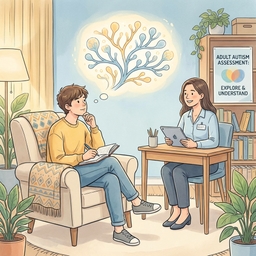
Adult Autism Assessment: What to Expect From Start to Finish
Wondering what happens during an adult autism assessment? Our comprehensive guide walks you through the entire evaluation process, from initial consultation to diagnosis.
Ready to Get Your Child Answers?
Take the first step toward understanding and supporting your child. Schedule their assessment today.
Schedule Your Child's Assessment