
For many AuDHD adults, the term “executive dysfunction” is a profound understatement. It is not just about procrastination or disorganization. It is a daily battle against an invisible wall that separates intention from action.
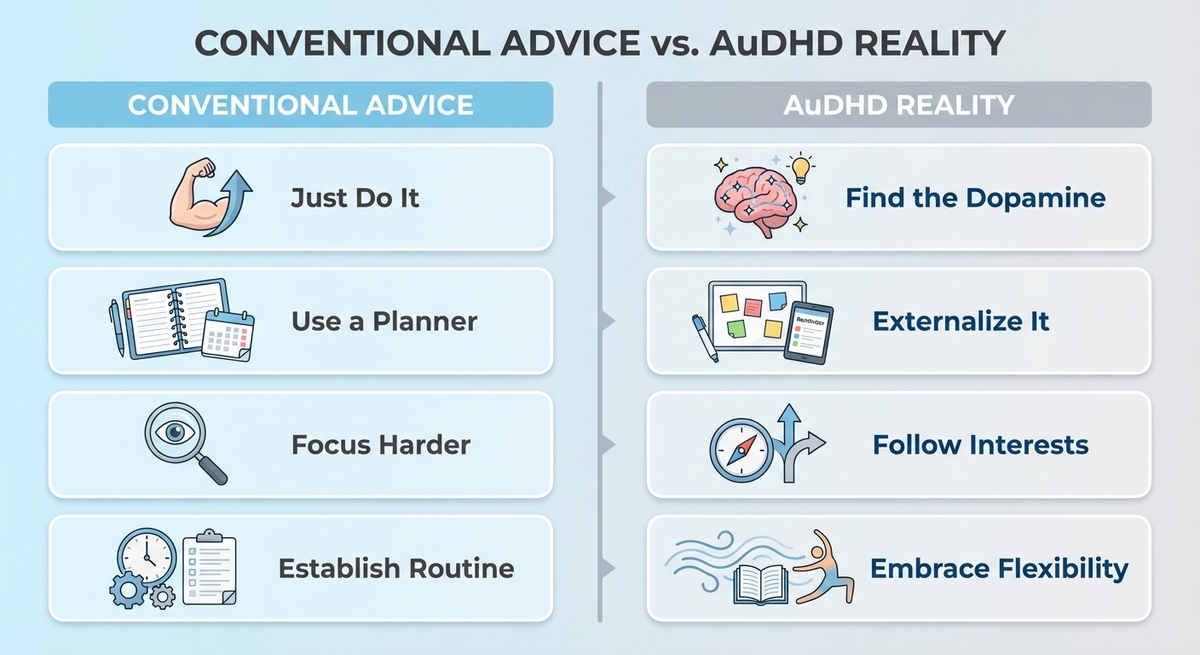
Neurotypical advice like “just make a list” or “try harder” often adds a layer of shame. It fails to acknowledge that the AuDHD brain is wired differently. Understanding this is a critical first step, often clarified through a formal diagnostic process.
For many in the Pacific Northwest, getting an official adult autism assessment provides the validation and framework needed to start building strategies that actually work.
This guide moves beyond conventional wisdom to explore community-tested, neuro-affirming hacks that honor the unique ways AuDHD brains operate. We’ll explore how to work with your brain’s need for dopamine and external support, not against it.
What Executive Dysfunction Actually Feels Like (vs. Laziness)
Executive dysfunction is not a moral failing or a lack of willpower. It is a neurological challenge in the brain’s management system.
For someone with both Autistic and ADHD traits (AuDHD), this can feel like a constant internal tug-of-war. The Autistic part of the brain may crave order and routine. Meanwhile, the ADHD part struggles with initiation and focus. The result is a state of paralysis.
Imagine this: On a gray Portland morning, you know you need to unload the dishwasher. You can see it. You want the clean dishes. You understand the simple steps involved. But your brain simply will not send the “go” signal.
This is “task initiation paralysis.” You might stand there for ten minutes, caught in a loop of knowing what to do but being physically unable to start. This is not laziness. It is a system failure in the brain’s transition circuits—the frustrating gap between knowing and doing.
The Dopamine Menu: A Visual Strategy for Motivation
One of the biggest hurdles for the AuDHD brain is a lack of dopamine, the neurotransmitter responsible for motivation and reward. When dopamine is low, even simple tasks feel impossible. A “Dopamine Menu” is a visual tool that externalizes decision-making and offers a list of accessible, rewarding activities to choose from when you’re stuck. Instead of trying to force yourself to do the “hard thing,” you pick something from the menu to get a small dopamine hit, which can often build momentum.
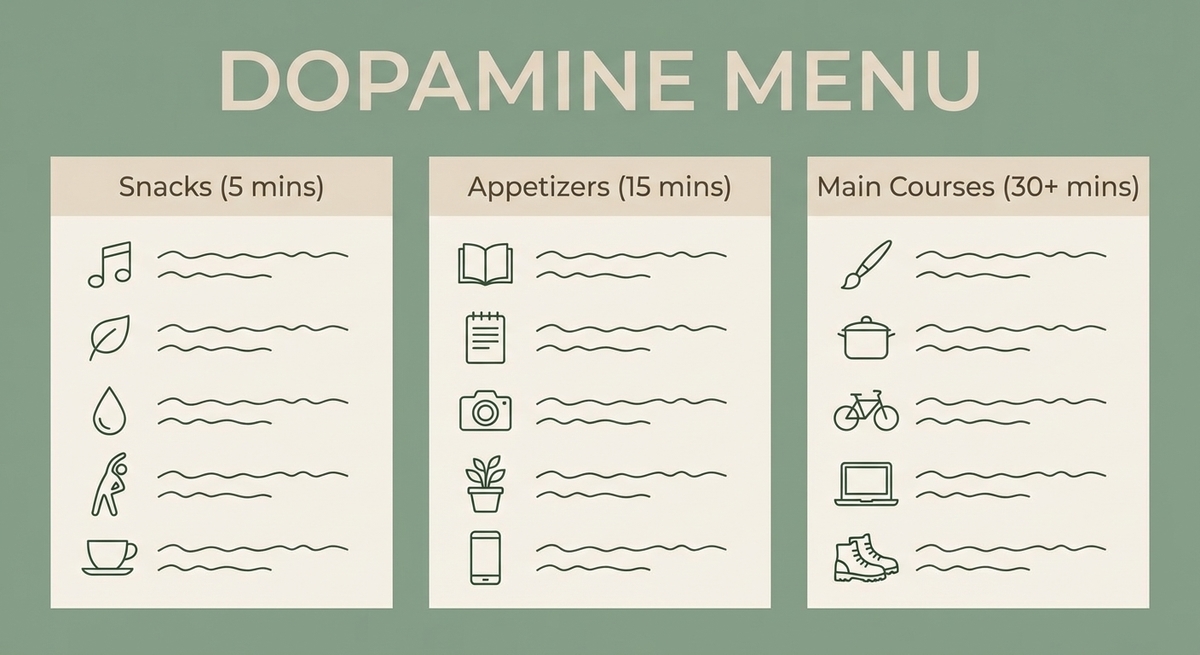
Your menu should be tailored to you, with categories based on effort level:
-
Snacks (Low Effort - 5 mins): Activities you can do with almost no energy.
- Listen to a favorite high-energy song.
- Do a 2-minute stretch.
- Drink a cold glass of water.
- Watch a funny animal video.
-
Appetizers (Medium Effort - 15 mins): Tasks that require a bit more engagement but are still manageable.
- Tidy one single surface (like the coffee table).
- Water the plants.
- Reply to one easy email.
- Take the trash out.
-
Main Courses (High Effort - 30+ mins): The bigger tasks you’ve been avoiding.
- Unload and load the dishwasher.
- Go for a walk around the block.
- Work on a project for 25 minutes (using a timer).
The key is to give yourself permission to start with a “snack.” You’re not procrastinating; you’re regulating your nervous system and giving your brain the fuel it needs to function.
The Art of ‘Externalizing’ Executive Function
If your internal manager is offline, why not hire an external one? Externalizing executive function means using outside tools, systems, and even people to handle the tasks your brain struggles with. This isn’t a crutch; it’s a smart accommodation.
Body Doubling & Virtual Coworking
Body doubling is the simple act of having someone else present—physically or virtually—while you complete a task. Their quiet presence provides a sense of gentle accountability and focus that can silence the distracting noise in your head. You don’t even need to interact. Many people in Oregon and Washington use virtual coworking platforms or have a “body double” call with a friend while they both work on separate tasks. This shared energy dramatically lowers the barrier to starting and sustaining focus.
AI as Your Executive Assistant
Modern technology offers powerful tools for externalizing. AI assistants can be incredible for breaking down overwhelming projects. If “clean the kitchen” feels too big, you can ask an AI to “break down ‘clean the kitchen’ into 10 simple, sequential steps.” It will spit out a clear, numbered list that you can follow without having to make any decisions, effectively outsourcing the planning phase your brain is struggling with.
‘Weird’ Hacks That Actually Work
The AuDHD community has crowdsourced brilliant, if unconventional, strategies that bypass the brain’s broken initiation system. The goal is to stop trying to reason with your brain and instead trick it into action.
Creating Artificial Urgency
The ADHD brain is often motivated by urgency and novelty. You can create this artificially to kickstart a task.
- The 5-Minute Sprint: Set a timer for just five minutes and commit to doing the task for that short period. Tell yourself you can stop when it goes off. Often, overcoming the initial inertia is the hardest part, and you’ll keep going.
- Beat the Clock: Turn tasks into a game. Can you fold all the laundry before your favorite podcast episode ends? Can you empty the dishwasher before the microwave finishes?
The ‘Good Enough’ Cleaning Standard
Perfectionism is the enemy of progress for AuDHD individuals. The “all or nothing” thinking common in autism can make tasks seem insurmountable. The “good enough” standard is about radical self-compassion. Instead of “clean the whole house,” the goal becomes “make it 10% better.” This could mean putting everything in a “doom basket” to deal with later or wiping down just one counter. It’s about making incremental progress without getting bogged down by an idealized outcome. Understanding how autism and ADHD are related helps clarify why this blend of perfectionism and initiation struggle is so common.
Building a Routine That Doesn’t Bore You
Routines can be a nightmare for the AuDHD brain. The Autistic need for predictability clashes with the ADHD brain’s craving for novelty. A rigid, unchanging schedule is a recipe for boredom and eventual abandonment.
The solution is a flexible, modular routine. Instead of a strict minute-by-minute schedule, create blocks of time with a menu of options. For example, your “Morning Hour” block might include a list of five possible activities (e.g., stretching, journaling, listening to music, a short walk, reading). You must do one of them, but you get to choose which one each day. This provides structure without sacrificing the novelty your brain needs to stay engaged, which is a key strategy for avoiding the exhaustion of autistic burnout versus depression.
When Executive Dysfunction Impacts Relationships
Executive dysfunction can be misunderstood by neurotypical partners, family, and friends as carelessness or a lack of respect. Explaining that your brain works differently is crucial. Frame it not as an excuse, but as an explanation. For example: “When I don’t do the dishes right away, it’s not because I don’t care about our home. It’s because my brain is having a system error trying to start the task. Could we try body doubling for 15 minutes tonight to get it done together?”
This content is for educational purposes only and is not a substitute for professional medical advice, diagnosis, or treatment. If you have concerns about autism, ADHD, or any other health condition, please consult a qualified healthcare provider.
Living with AuDHD in a world not built for your brain is challenging, but it’s not impossible. By embracing these neuro-affirming strategies, you can reduce shame and find compassionate, effective ways to navigate your daily life. If you’re in Oregon or Washington and seeking clarity on your own neurotype, the team at Haven Health Autism Assessments is here to help. Contact us to learn more about our validating assessment process.


