
Have you ever come home from work, a social event, or even the grocery store and needed to lie in a dark room for hours just to recover? If so, you might know the cost of camouflaging.
For many Autistic adults in the Pacific Northwest, navigating a neurotypical world takes a huge amount of energy. This goes beyond being polite or professional. It is a complex, often unconscious survival strategy known as camouflaging (also called masking).
Masking can help you get through social situations in the short term. But the long-term price is often exhaustion, identity confusion, and severe burnout. Here is a look at what camouflaging means, why it drains you, and how you can start to safely unmask.
What is Autistic Camouflaging?
Autistic camouflaging is the process of suppressing autistic traits and mimicking neurotypical behaviors to blend in. This can happen consciously or unconsciously. It is an adaptation strategy that develops to avoid stigma, bullying, or social rejection.
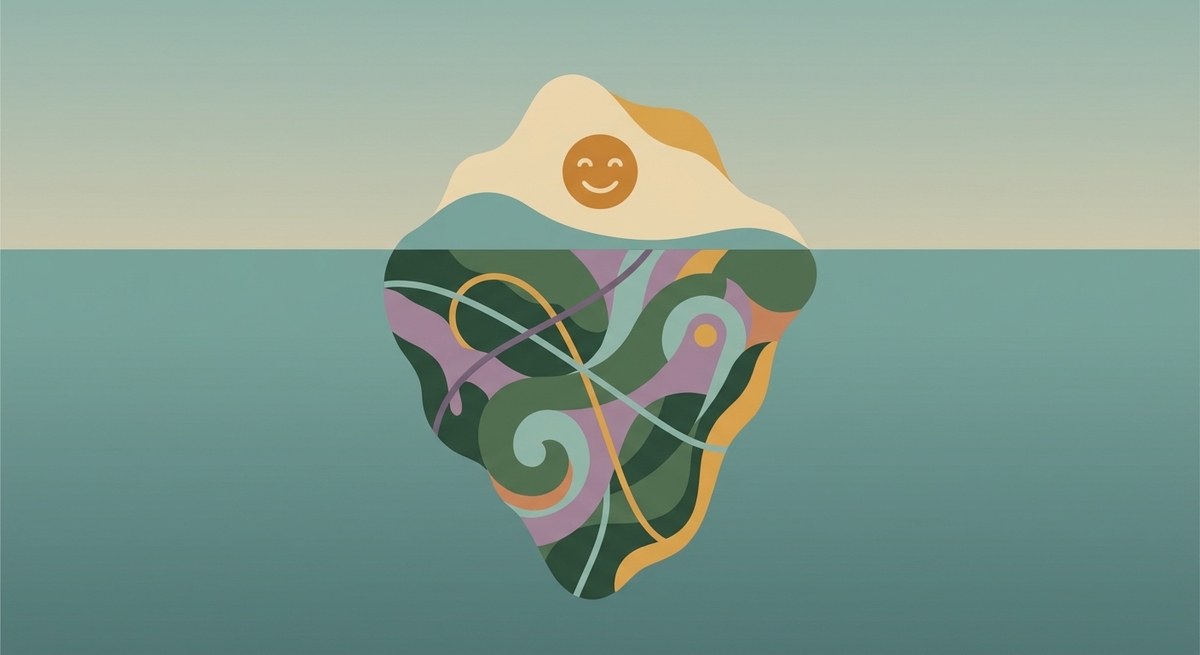
The Iceberg Analogy
Think of it like an iceberg. Above the water, people see the “public self”: someone making eye contact, using small talk, and sitting quietly.
Below the water is a massive, hidden structure of effort:
- Suppressing the urge to stim
- Manually calculating when to laugh
- Ignoring sensory pain from fluorescent lights
- Constantly monitoring your own body language
This gap between internal experience and external performance is where the danger lies. It is not just “acting.” It is a high-stakes performance where failure feels like social exile.
The High Cost of Passing
Many late-diagnosed adults spend decades perfecting their mask. They often do not realize they are doing it. The outside world might view you as “lower support needs.” But that label ignores the immense cognitive price you pay to maintain the illusion.
Cognitive Load and Executive Dysfunction
Masking requires your brain to run a constant “emulator” of neurotypical social skills. You might find yourself:
- Scripting conversations before they happen
- Analyzing facial expressions in real-time
- Forcing eye contact that feels physically uncomfortable
This takes up a massive amount of your brain’s available processing power. When all your resources go toward “passing” as neurotypical, little remains for executive function tasks like planning dinner, organizing work, or regulating emotions.
This is why you might hold it together perfectly at the office, only to experience a meltdown the moment you close your front door.
Physical Health Impacts (The Burnout Cycle)
One of the most dangerous misconceptions is confusing autistic burnout with general tiredness or depression. While they can look similar, the root causes and recovery needs differ.
Depression often responds to behavioral activation (getting out and doing things). Autistic burnout, on the other hand, comes from the chronic stress of masking and sensory overload. It requires rest and a reduction in demands. If you try to “push through,” you risk a deeper crash.
Learn more about the overlap and differences in our guide: Can Autism Cause Depression?
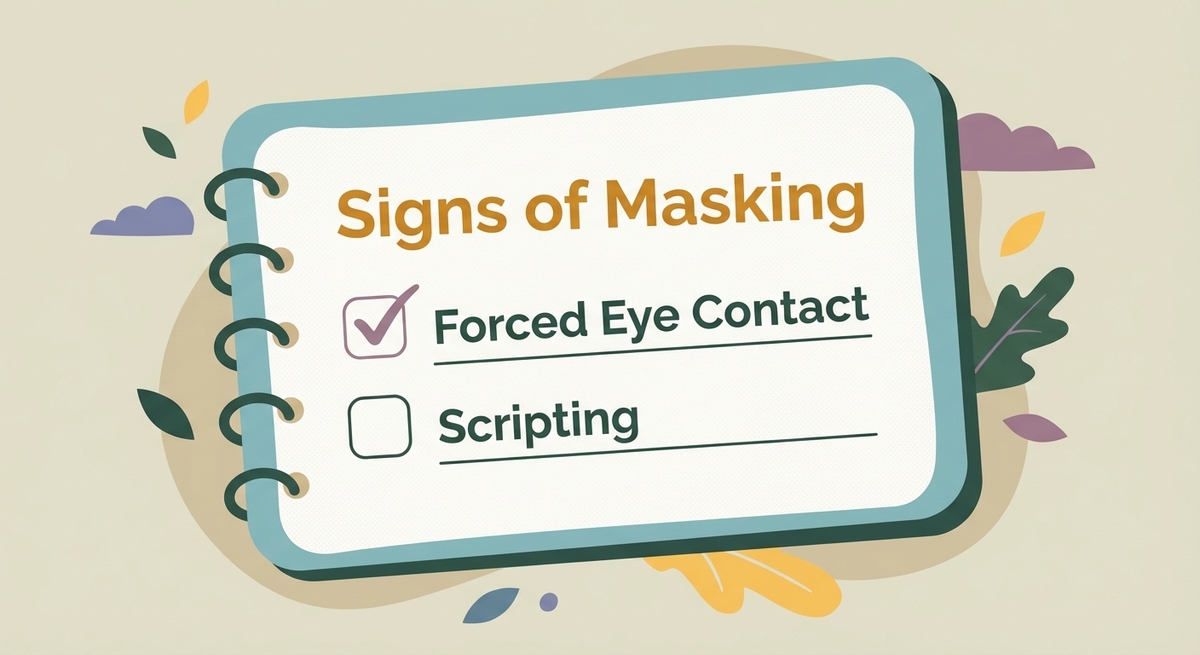
Signs You Are Masking
Camouflaging often begins in childhood. Many adults do not realize they are doing it until they hit a breaking point.
Mirroring and Mimicking
Do you adopt the accent, posture, or vocabulary of the person you are talking to? This is mirroring. It creates safety by becoming like the other person.
You might also rely on “social scripts”—pre-planned responses for common interactions. Spontaneous social chit-chat feels chaotic and unpredictable, so scripts provide structure.
Suppression of Stims
Stimming (self-stimulatory behavior) is a natural way for Autistic people to regulate their nervous systems. Masking involves suppressing these urges:
- Forcing your hands to be still
- Stopping yourself from rocking
- Hiding fidgets under the table
When you suppress the body’s natural way of releasing tension, that stress builds up internally.
This ability to hide traits is a primary reason many adults fly under the radar during childhood screenings. Learn why traditional assessments miss high-masking autism and why specialized insight is necessary.
The Grief of the Late Diagnosis
Unmasking often starts with a diagnosis. But that diagnosis can bring complicated feelings. Community members commonly say, “I almost wish I wasn’t diagnosed.”
’I Wish I Was Never Diagnosed’: Understanding the Regret
This sentiment usually is not about the autism itself. It is about the grief of realization. When you see how much energy you spent trying to fix something that was not broken, it can be devastating.
You may look back at years of exhaustion and wonder what you could have achieved if you had not been fighting your own neurology.
Dealing with Internalized Ableism
Years of masking can create a harsh inner critic. You might have internalized beliefs like:
- Your sensory needs are “dramatic”
- Your need for rest is “laziness”
- Asking for accommodations is “making excuses”
Unmasking requires challenging these beliefs. Your needs are valid, even if they differ from the norm.
How to Start Unmasking Safely
Unmasking is not a switch you flip. It is a slow, deliberate process. You decide when and where you feel safe enough to be your authentic self.
Step 1: Audit Your Energy Budget
Start paying attention to which interactions drain you the most. Common high-cost activities include:
- Weekly team meetings
- Grocery shopping
- Large social gatherings
Once you identify them, you can start making adjustments. This might look like wearing noise-canceling headphones during your commute or declining a social invitation without guilt.
Step 2: Permission to Stim
Reconnecting with your body is vital. Experiment with letting yourself stim in private:
- Flap your hands
- Rock in your chair
- Use a fidget toy
Notice how it affects your anxiety levels. Regulation is key to preventing burnout.
Discover how a sensory diet can help regulate your nervous system and provide the input you’ve been suppressing.
Step 3: Selective Disclosure Scripts
You do not owe everyone your diagnosis. However, having a script for trusted people can be empowering. It might be as simple as:
- “I’m not ignoring you; I just listen better by looking away.”
- “I need to leave early to recharge my battery.”
Finding Your Way Back to Yourself
Unmasking is ultimately about sustainability. It is about building a life that works for your brain, rather than twisting your brain to fit a life that hurts.
Whether you are in Portland, Vancouver, or anywhere in between, finding a community that affirms your neurodivergence is a powerful step toward healing. If you suspect that your exhaustion is rooted in years of camouflaging, we are here to help you navigate that journey with compassion and expertise.
Ready to Learn More?
If you’re exploring neurodivergence, Haven Health offers validating, non-pressuring Adult Autism Assessments and ADHD Evaluations in the Pacific Northwest. Reach out today to start your journey.
This content is for educational purposes only and is not a substitute for professional medical advice, diagnosis, or treatment. If you have concerns about autism, ADHD, or any other health condition, please consult a qualified healthcare provider.


