
What is AuDHD Executive Dysfunction? It’s Not Laziness
If you have ever stared at a simple task, screaming at yourself internally to “just do it,” while your body remains stubbornly still, you might be experiencing AuDHD executive dysfunction. This is not poor discipline, a lack of willpower, or laziness. It is a biological phenomenon rooted in the unique wiring of a brain that is both Autistic and has ADHD.
More Than Two Conditions Combined
AuDHD is more than just having two separate conditions. It is a distinct neurotype where Autistic and ADHD traits intersect, often creating a conflicting internal experience.
- The ADHD brain seeks novelty and dopamine.
- The Autistic brain craves routine and predictability.
This internal push-and-pull can make executive functions (the brain’s management system for tasks, time, and emotions) incredibly difficult to access on demand.
For many in the Pacific Northwest, the long, gray winters can further impact energy and motivation. Understanding this is the first step toward finding strategies that actually work.
The ‘Action Brain’ Breakdown
Think of executive function as the control center of your “Action Brain.” This center relies on neurotransmitters (chemical messengers), primarily dopamine, to send signals that:
- Initiate tasks
- Regulate focus
- Manage impulses
- Sustain effort
In a neurotypical brain, this system works relatively smoothly. It allows a seamless transition from intention to action.
How the AuDHD Brain Differs
For the AuDHD brain, this signaling system is different. It is not broken, but it has unique requirements. It often needs a higher threshold of stimulation or interest to produce enough dopamine to get started.
When a task is uninteresting or overwhelming, the brain simply does not generate the chemical “ignition” needed to engage. This can feel like a frayed wire. The signal is sent, but it does not connect with enough force to power the machine.
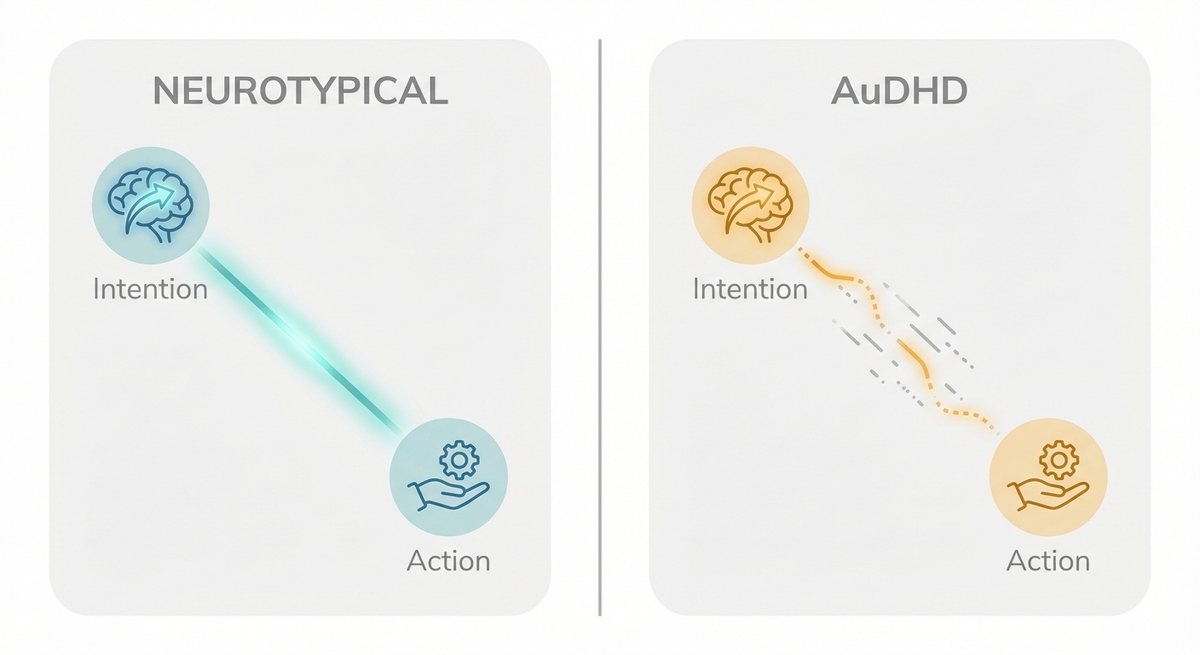
This is not a character flaw. It is a biological reality that explains why forcing yourself to “try harder” often results in frustration and burnout rather than productivity. The solution is not more force, but a different kind of fuel.
Why You Feel ‘Locked’: 3 Hidden Causes
That feeling of being frozen or “locked” in place is a hallmark of AuDHD executive dysfunction. It is intensely distressing and often misinterpreted by the outside world. This paralysis stems from several interconnected causes.
1. The Idle/Freeze Loop (Autistic Inertia)
Autistic inertia is the tendency to remain in a state of either rest or motion. When at rest, initiating a new task requires overcoming immense internal resistance.
This is not a calm, restful state. It is an active, high-anxiety freeze response. Your brain is screaming “DANGER!” at the prospect of transitioning. Your nervous system slams on the brakes.
This task paralysis is your body’s attempt to protect you from perceived overload, even if the task itself is minor.
2. The Perfectionism-Procrastination Cycle
The AuDHD brain often sees two options: do it perfectly or do not do it at all. This black-and-white thinking (a common Autistic trait) combined with the ADHD tendency toward procrastination creates a vicious cycle.
The fear of not meeting impossibly high standards makes starting a task feel monumental. As a result, you delay until the last possible second. The adrenaline of a looming deadline finally provides enough of a chemical kick to override the perfectionist block.
This is not a sustainable strategy and often leads to exhaustion and shame.
3. The ‘Speechless’ Burnout (Sensory Overload)
Have you ever felt like your words are trapped behind a glass wall? This temporary loss of speech or creativity often results directly from burnout.
The constant effort of masking, navigating social cues, and processing sensory information drains your cognitive resources. When your brain’s battery is depleted, it enters a “low power mode” to conserve energy. Non-essential processes, like fluent speech and creative ideation, shut down first.
This is a key reason why many people explore what happens during an adult autism assessment, seeking answers for these debilitating experiences.
When Medication Stops Working: The Tolerance Trap
For many with AuDHD, stimulant medication can feel like a miracle at first. Suddenly, the “Action Brain” has the dopamine it needs to function. But sometimes, after a few weeks or months, the effects seem to diminish.
Understanding Tolerance vs. Therapeutic Levels
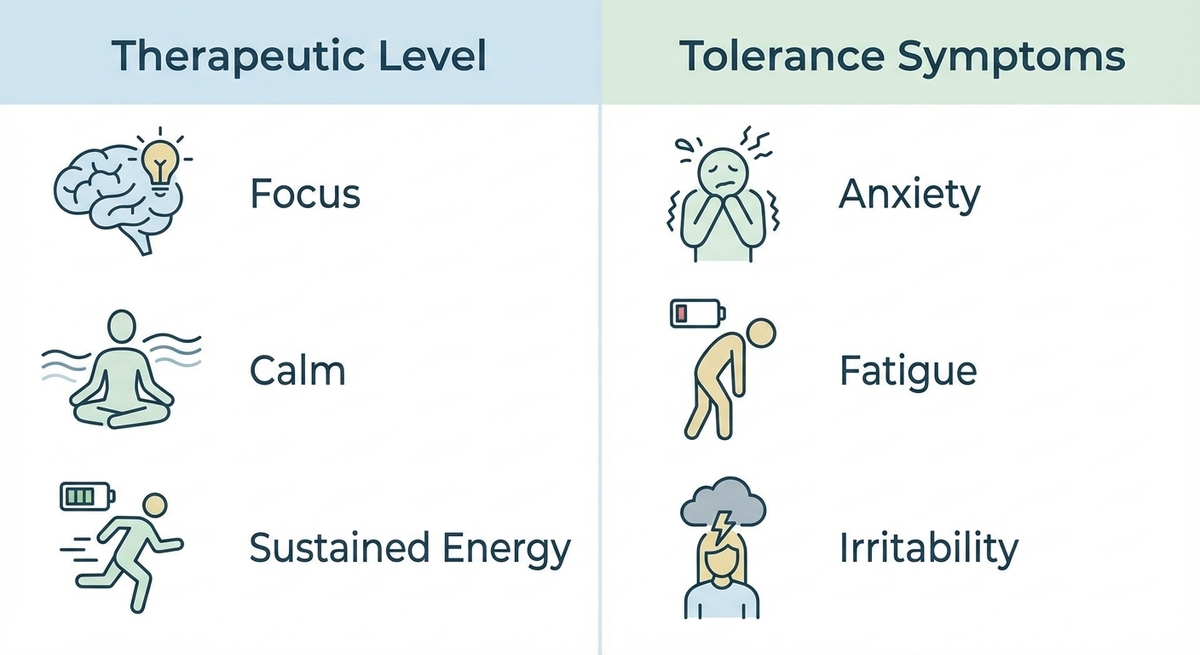
This is often not a sign that you need a higher dose. Rather, your body is developing a tolerance. Your brain adapts to the new baseline of dopamine. The initial clarity and motivation can fade.
This can lead to the “Adderall crash,” where the periods between doses bring intense fatigue and irritability. It is crucial to understand the difference between:
- A medication working at a stable, therapeutic level
- The body building tolerance
Working With Your Provider
Working with a knowledgeable provider is essential. Sometimes, strategies like planned “medication holidays” or incorporating non-pharmaceutical supports can help maintain the medication’s effectiveness without constantly increasing the dosage.
Understanding how autism and ADHD are related is key to finding a holistic support plan.
How to Bypass the Block (Low-Energy Hacks)
Managing AuDHD executive dysfunction is not about finding a magic “cure.” It is about building a toolkit of low-energy strategies that work with your brain, not against it. These “hacks” artificially create the conditions your brain needs to initiate action.
Body Doubling & Virtual Coworkers
Body doubling is the simple act of having another person present, either physically or virtually, while you complete a task. Their quiet presence provides external accountability and a subtle sense of co-regulation.
You do not need them to help. Their presence alone is the catalyst. Virtual co-working platforms or even a friend on a video call can be incredibly effective.
‘Good Enough’ vs. Perfect: The 70% Rule
To combat the perfectionism-procrastination cycle, give yourself permission to do a “bad job.” The goal is to lower the barrier to entry so that starting feels less daunting.
The 70% Rule works like this: aim to complete the task to a 70% “good enough” standard. More often than not, your 70% is someone else’s 100%. This shifts the focus from achieving a perfect outcome to simply getting it done.
Summary: Regulating Your Nervous System
Navigating AuDHD executive dysfunction is ultimately an exercise in nervous system regulation. The feeling of being “stuck” signals that your system is overwhelmed and in a state of threat.
The strategies that work are not about discipline. They are about creating a sense of safety. Whether it is the gentle accountability of a body double, the permission to be imperfect, or recognizing the early signs of autistic burnout versus depression, each tool helps bring your nervous system back to a place where action feels possible.
This content is for educational purposes only and is not a substitute for professional medical advice, diagnosis, or treatment. If you have concerns about autism, ADHD, or any other health condition, please consult a qualified healthcare provider.
If you’re in Oregon or Washington and these struggles feel deeply familiar, it may be time for clarity. Understanding your neurotype is the first step toward building a life that supports you. Contact Haven Health to learn more about our affirming AuDHD and adult autism assessments.


